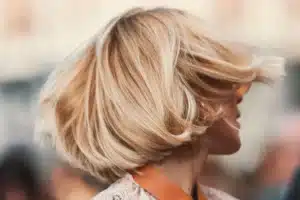
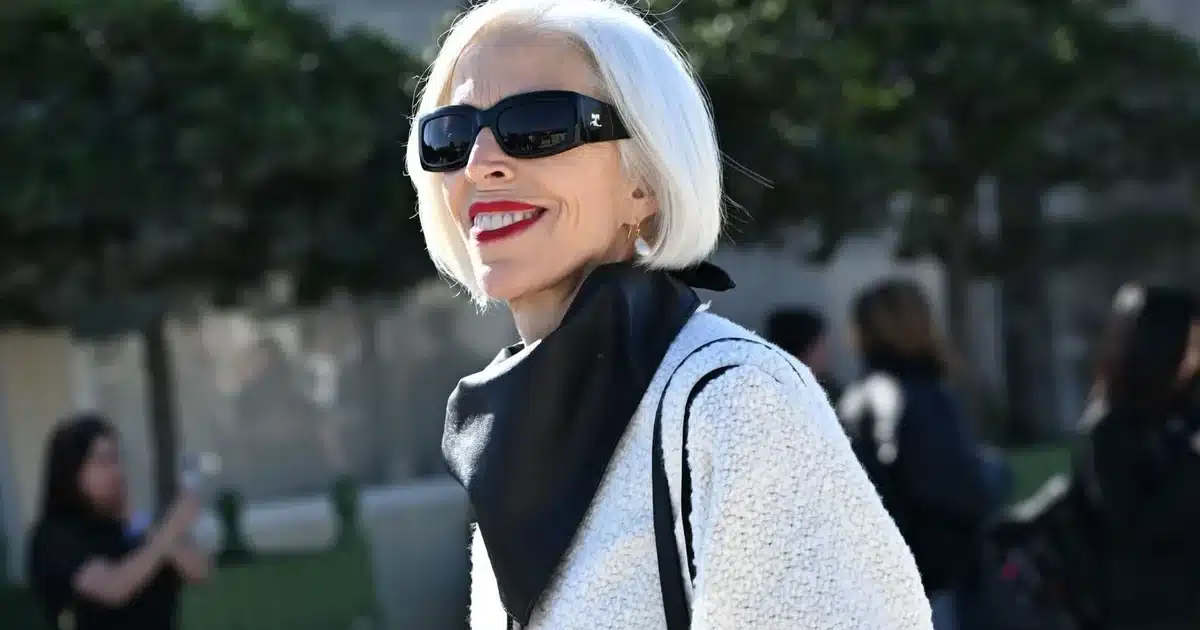
The bob is the best haircut for gray hair after 50, according to British hairdresser Krysia West, interviewed by Harper's Bazaar UK. Described as "timeless, elegant and incredibly flattering," it works across textures and face shapes — as long as you choose the right variation. Structure, West insists, matters "more than ever" when hair goes gray.
Gray hair changes everything. Not just the color, but the texture, the weight, the way light hits each strand. What worked at 35 may actively age you at 55 — not because of the gray itself, but because the wrong cut stops working with your hair and starts working against it. That's the core argument Krysia West makes, and it's hard to disagree once you understand the logic behind it.
The principle is simple: when pigment disappears, form has to carry the full visual weight. Color does a remarkable amount of work in any hairstyle — it creates contrast, defines edges, draws the eye. Without it, shape becomes the only tool left. And the bob, in its many variations, is the shape that does this job best after 50.
The bob haircut for gray hair works because of balance and framing
West's central principle is "balance and framing," and both concepts matter more than they might initially seem. A well-placed bob creates a natural frame around the face, drawing the eye upward and softening the jawline. It doesn't just sit on the head — it actively reshapes how your features read.
Gray hair without structure, by contrast, risks blending into the complexion rather than contrasting with it. The result is an appearance that reads as flat or undefined, even when the hair itself is healthy. A good haircut illuminates the features and brings freshness. A bad one can harden them or leave you looking tired — not because of age, but because of the absence of intentional shape.
Why gray hair demands a different approach to cutting
Gray hair behaves differently from pigmented hair, and that behavioral shift is what makes choosing the right cut so consequential. For some women, hair becomes thicker with age. For others, it turns coarser, sometimes wiry. And for many, it becomes noticeably finer. These aren't cosmetic differences — they affect how a cut falls, how it moves, and how it holds its shape over time.
This is why West's recommendation isn't simply "get a bob." It's "get the right bob for your texture." The variation matters as much as the style itself. Choosing a cut based purely on aesthetics without accounting for how gray hair actually behaves is one of the most common mistakes women make after 50.
Structure replaces pigment as the primary visual tool
When hair loses its color, the cut has to do what pigment once did: create definition, add contrast, and give the overall look a sense of intention. Without structure, gray hair can appear heavy and flat, or — depending on the texture — puffed and shapeless. Neither reads as polished. A structured bob solves this by giving the hair a clear silhouette that works regardless of color.
Gray hair reflects light differently than pigmented hair. This is why shape and structure become the primary visual anchors in any gray hairstyle — they create the contrast that color used to provide.
Five bob variations, each matched to a specific texture
West identifies 5 distinct variations of the bob, and each one corresponds to a specific hair type or styling intention. The logic is texture-first, not trend-first.
1. Layered bob — Designed for fine or wavy hair. Layers add movement and prevent the cut from looking flat, which is a real risk when fine gray hair lacks the density to hold a blunt line. The layers create visual texture without adding bulk.
2. Blunt bob — The right choice for thick hair with a uniform gray tone. A clean, unbroken line gives structure without adding volume. This is critical: too many layers on thick gray hair creates unwanted puffiness and makes the cut harder to manage.
3. French bob — Short, square, cut at or just below the chin. This is a strong stylistic statement, and it works precisely because of its deliberate geometry. It's not a soft look, but for women who want something affirmative and modern, it delivers.
4. Asymmetric cut — One side longer than the other. This variation adds visual interest and movement, and it works particularly well for women who want the structure of a bob without the symmetry.
5. Long layered cut with disciplined ends — For those who want to keep length. This isn't a traditional bob in the strict sense, but it applies the same principle: defined ends, intentional layers, and enough structure to prevent the hair from looking shapeless. It's the best haircut for gray hair among women who aren't ready to go short.
- Illuminates facial features
- Creates contrast against the complexion
- Draws the eye upward, softening the jaw
- Gives structure where pigment used to provide it
- Hardens the features or makes you look tired
- Creates puffiness on thick hair (too many layers)
- Lets gray blend into the skin tone instead of contrasting
- Leaves the overall look undefined and flat
How to choose the right variation for your hair
The decision tree is straightforward once you stop thinking about trends and start thinking about texture. West's framework is direct: work with your hair's natural behavior, not against it.
Fine or wavy gray hair calls for the layered bob. The layers compensate for the lack of density and give the cut movement it wouldn't otherwise have. Thick gray hair, on the other hand, benefits from the blunt bob — a clean line that disciplines the volume without amplifying it. Adding too many layers to thick gray hair is one of the three things West explicitly flags as a mistake to avoid, alongside choosing a cut with no defined shape and ignoring texture entirely when selecting a style.
For women drawn to a more assertive look, the French bob or asymmetric cut offers that stylistic statement. Both require commitment — they're not low-maintenance options — but they deliver a clarity of silhouette that makes gray hair look intentional rather than incidental. And for anyone who wants to keep length while still applying these principles, the long layered cut with disciplined ends bridges the gap between structure and volume.
The underlying logic applies across all five variations: gray hair needs a framework. Just as a well-chosen neckline can transform how an outfit reads, the right cut reframes the face entirely. The gray itself isn't the issue. The absence of shape is. And the bob, in whichever form suits your texture, is the most reliable solution hairdressers keep coming back to — spring after spring, year after year.